


Copyright vs Trademark – What Every Startup Needs to Know

What makes your business unique can be lost in a crowded market if you do not know how to protect it. Many Italian and international start-up founders are often confused by the difference between copyright and trademark, yet these rights guard very different aspects of your company. Understanding the distinctions between creative works protection and brand identification helps you choose the right legal tools to secure your software, designs, and reputation in a competitive tech environment.
Table of Contents
Key Takeaways
Point | Details |
Understanding IP Protections | Startup founders must grasp the differences between copyrights and trademarks to protect their creative and commercial assets effectively. |
Copyright Significance | Copyright automatically guards original creative works, lasting for the creator’s lifetime plus 70 years, enabling creators to monetize their assets. |
Trademark Importance | Trademarks protect brand identity and can last indefinitely with renewals, essential for maintaining a unique market presence. |
Proactive IP Management | Founders should implement a systematic strategy for IP, including regular renewals and thorough searches to avoid legal issues. |
Defining Copyright and Trademark Distinctions
Startup founders must understand the critical differences between copyright and trademark protections to effectively safeguard their intellectual property. These legal mechanisms serve distinct purposes in protecting creative and commercial assets. Intellectual property distinctions reveal that while they may seem similar, copyright and trademark rights fundamentally protect different aspects of business innovation.
A copyright protects original creative works such as software code, design blueprints, artistic compositions, written materials, and digital content. This protection automatically applies upon creation, giving creators exclusive rights to reproduce, distribute, and monetize their original works. Trademarks, by contrast, protect brand identifiers like company names, logos, slogans, and distinctive visual marks that distinguish a business’s goods or services in the commercial marketplace.
The registration and duration of these protections differ significantly. Copyrights typically last for the creator’s lifetime plus an additional 70 years, providing long-term protection for artistic and intellectual works. Trademarks can potentially last indefinitely, provided the mark continues to be used in commerce and renewed periodically. Understanding these nuances helps startup founders strategically protect their creative and commercial assets, ensuring comprehensive intellectual property management.
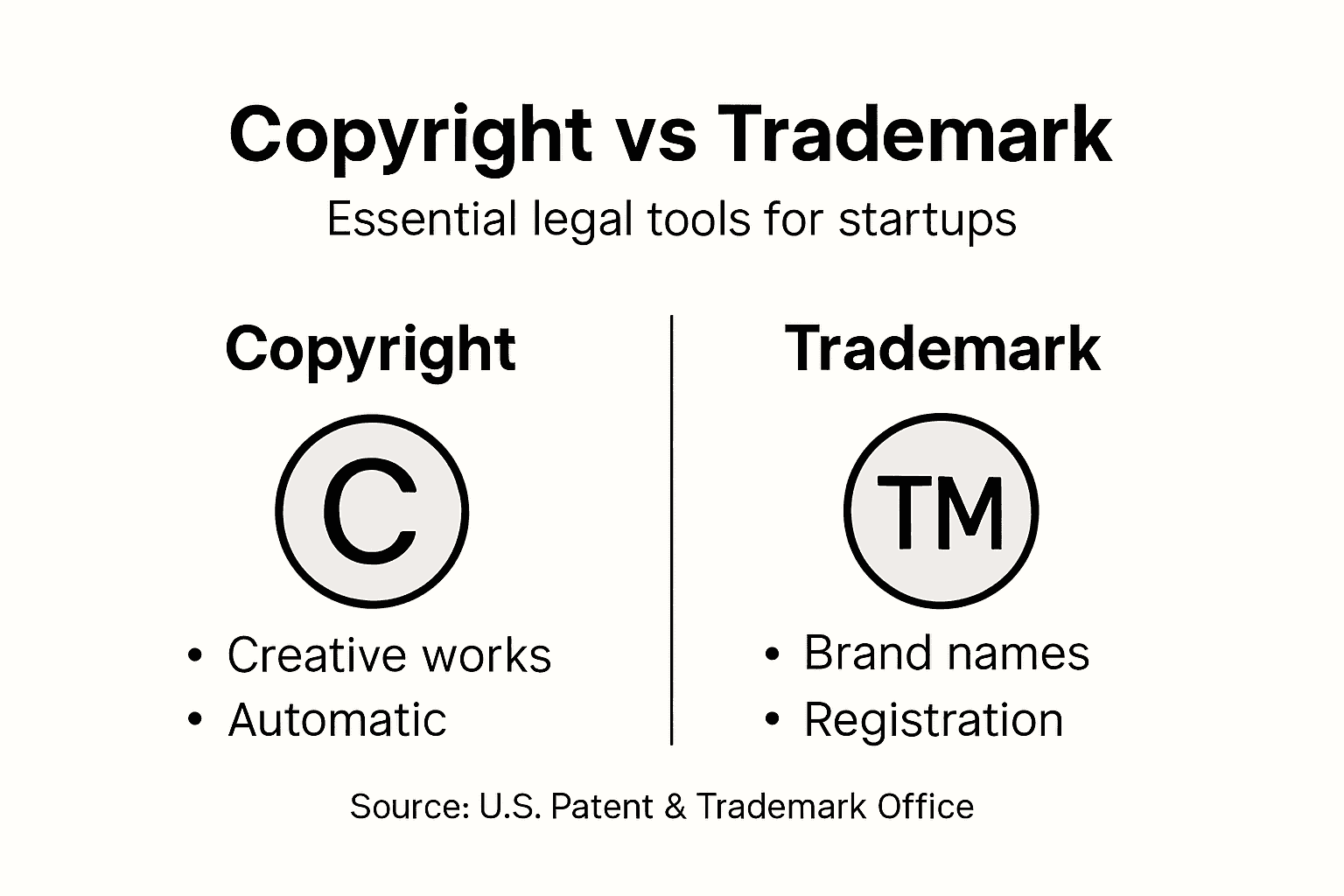
Here’s a concise comparison of copyright and trademark protections for startups:
Aspect | Copyright | Trademark |
What It Protects | Creative works and original content | Brand names, logos, slogans |
Duration | Lifetime plus 70 years | Indefinite with renewals |
Registration Need | Optional, but beneficial | Strongly recommended |
Primary Benefit | Monetize creative assets | Defend brand identity |
Pro tip: Consult an intellectual property attorney early to develop a comprehensive protection strategy that covers both your creative works and brand identity.
How Copyright Protects Creative Works
Copyright law provides critical protection for startup creators, safeguarding their original artistic and intellectual productions. Copyright protection mechanisms ensure that innovative works receive comprehensive legal defense from the moment they are created and fixed in a tangible format. This protection covers an extensive range of creative expressions, including software code, design documents, digital content, musical compositions, visual art, and written materials.

The legal framework of copyright grants creators exclusive rights to control how their works are used, distributed, and monetized. These rights include the ability to reproduce the work, prepare derivative versions, distribute copies, perform the work publicly, and display the creative content. While formal registration is not mandatory, doing so provides significant advantages such as establishing a public record of the copyright, enabling legal action against potential infringers, and qualifying for statutory damages in case of unauthorized use.
Startup founders should understand that copyright protection is automatic upon creation, lasting for the creator’s lifetime plus an additional 70 years. This extended protection ensures that creators and their heirs can benefit from their intellectual contributions long after the initial development. Different categories of creative works receive similar comprehensive protections, whether they are digital innovations, artistic designs, written publications, or multimedia content. The broad scope of copyright law reflects its fundamental goal of encouraging creativity by providing creators with legal tools to protect and monetize their original works.
Pro tip: Maintain detailed documentation of your creative process and keep original drafts, as these can serve as crucial evidence of your work’s originality and creation date.
Trademark Essentials for Brand Protection
Trademarks represent a crucial legal mechanism for startups to protect their brand identity and prevent consumer confusion in the marketplace. Trademark protection fundamentals enable businesses to secure exclusive rights to words, phrases, designs, and symbols that uniquely represent their goods or services. These distinctive marks serve as critical markers of commercial origin, helping consumers quickly identify and differentiate products from competing brands.
The legal framework surrounding trademarks provides comprehensive protection for businesses seeking to establish and maintain their market presence. Trademark registration grants several significant advantages, including nationwide legal protection, the ability to prevent competitors from using similar marks, and the right to pursue legal action against potential infringers. Startup founders should understand that a strong trademark goes beyond mere visual representation – it encapsulates the reputation, quality, and trustworthiness associated with their brand.
Federal trademark registration offers startups powerful tools for brand protection, including exclusive nationwide usage rights and the ability to use the ® symbol. The registration process involves demonstrating the mark’s distinctiveness and its use in commercial transactions. Successful trademark protection requires ongoing maintenance, including periodic renewals and active enforcement to prevent dilution or unauthorized use. Startup leaders must view their trademark as a valuable intellectual property asset that can appreciate in value as their brand gains recognition and market share.
Pro tip: Conduct a comprehensive trademark search before finalizing your brand identity to avoid potential legal conflicts and ensure your chosen mark is truly unique.
Legal Processes for Registration and Enforcement
Startup founders must navigate complex legal pathways to effectively protect their intellectual property through copyright and trademark registrations. Intellectual property registration processes involve distinct procedures for different types of creative assets, each with unique requirements and legal implications. While copyright protection begins automatically upon creation, formal registration provides critical advantages such as establishing a public record and enabling legal enforcement mechanisms.
Copyright registration with the U.S. Copyright Office requires submitting an application, a non-refundable filing fee, and copies of the work being registered. This process creates an official public record and grants the copyright holder enhanced legal protections, including the ability to pursue statutory damages and attorney fees in potential infringement cases. Trademark registration through the United States Patent and Trademark Office (USPTO) demands a more rigorous process, including demonstrating the mark’s distinctive character and its active use in commercial transactions.
Both copyright and trademark registrations demand ongoing maintenance to preserve legal protections. Trademark owners must file periodic renewal documents and demonstrate continuous commercial use to maintain their registration status. Copyright protections typically last for the creator’s lifetime plus an additional 70 years, providing long-term safeguards for intellectual assets. Startup founders should view these registration processes not as bureaucratic hurdles, but as strategic investments in protecting their most valuable intangible assets and preventing potential future legal disputes.
Pro tip: Consult an intellectual property attorney early in your startup journey to develop a comprehensive protection strategy that aligns with your business goals and minimizes potential legal risks.
Risks, Pitfalls, and Strategic IP Management
Startup founders must proactively manage intellectual property risks to prevent costly legal complications and protect their innovative assets. Intellectual property management strategies require careful navigation of complex legal landscapes to avoid potential infringement, rights disputes, and brand erosion. Understanding the nuanced challenges of IP protection is crucial for maintaining a competitive edge and safeguarding a company’s most valuable intangible resources.
Common pitfalls in IP management include failing to conduct comprehensive trademark and copyright searches, which can lead to unintentional infringement and potential litigation. Startups often underestimate the importance of maintaining and renewing their intellectual property registrations, risking the loss of critical legal protections. Additionally, many young companies neglect to develop a cohesive IP strategy that aligns with their broader business objectives, leaving critical creative and commercial assets vulnerable to competitive threats.
Strategic IP management demands a proactive and holistic approach. This involves not only registering trademarks and copyrights but also implementing robust internal policies for documenting and tracking intellectual property. Startups should create detailed records of creative processes, maintain clear chains of ownership, and regularly audit their intellectual property portfolio. Developing a comprehensive IP strategy requires understanding the specific protections offered by trademarks and copyrights, and how these can be strategically deployed to support the company’s growth and innovation goals.
The following summarizes critical IP management challenges and best practices for founders:
Challenge | Risk | Strategic Solution |
Incomplete IP search | Legal conflicts and disputes | Conduct thorough investigations |
Missed renewals | Loss of protection | Set automated reminders |
Vague ownership records | Disputed rights | Document contributions clearly |
No IP strategy | Weak competitive position | Align IP with business goals |
Pro tip: Develop a systematic IP tracking system that documents the creation, registration, and potential commercial applications of all your intellectual assets.
Protect Your Startup’s Most Valuable Intellectual Assets Today
Navigating the complexities of copyright and trademark protection can be overwhelming for startup founders aiming to secure their creative works and brand identity. The risks of incomplete IP searches, missed renewals, and unclear ownership records create vulnerabilities that competitors or infringers could exploit. If you want to avoid costly legal battles and build a resilient intellectual property portfolio that grows with your business, you need expert guidance tailored to your innovative vision and commercial goals.
Discover how Studio Legale Coviello leverages cutting-edge technology and international expertise to offer precise legal and technical consulting for startups. From comprehensive trademark searches to thorough copyright strategies, their services include digital tools and bespoke support that protect your intellectual assets across borders. Do not wait until infringement threatens your future. Visit our main site now to secure a consultation and take the vital first step toward safeguarding your startup’s creativity and brand reputation.
Frequently Asked Questions
What is the main difference between copyright and trademark?
Copyright protects original creative works such as software, designs, and written materials, while trademark protects brand identifiers like names, logos, and slogans that distinguish goods or services in the marketplace.
How long does copyright protection last?
Copyright protection lasts for the creator’s lifetime plus an additional 70 years, ensuring long-term ownership of creative works.
Do I need to register my copyright or trademark?
While copyright protection is automatic upon creation, registering it provides advantages like legal recourse for infringement. Trademark registration is strongly recommended for securing exclusive rights and preventing brand confusion.
What are the risks of not managing intellectual property effectively?
Failing to manage intellectual property can lead to legal conflicts, loss of protection, and vulnerability to competitors. It’s crucial to maintain registrations, document ownership, and develop a cohesive IP strategy.
Recommended

Comments